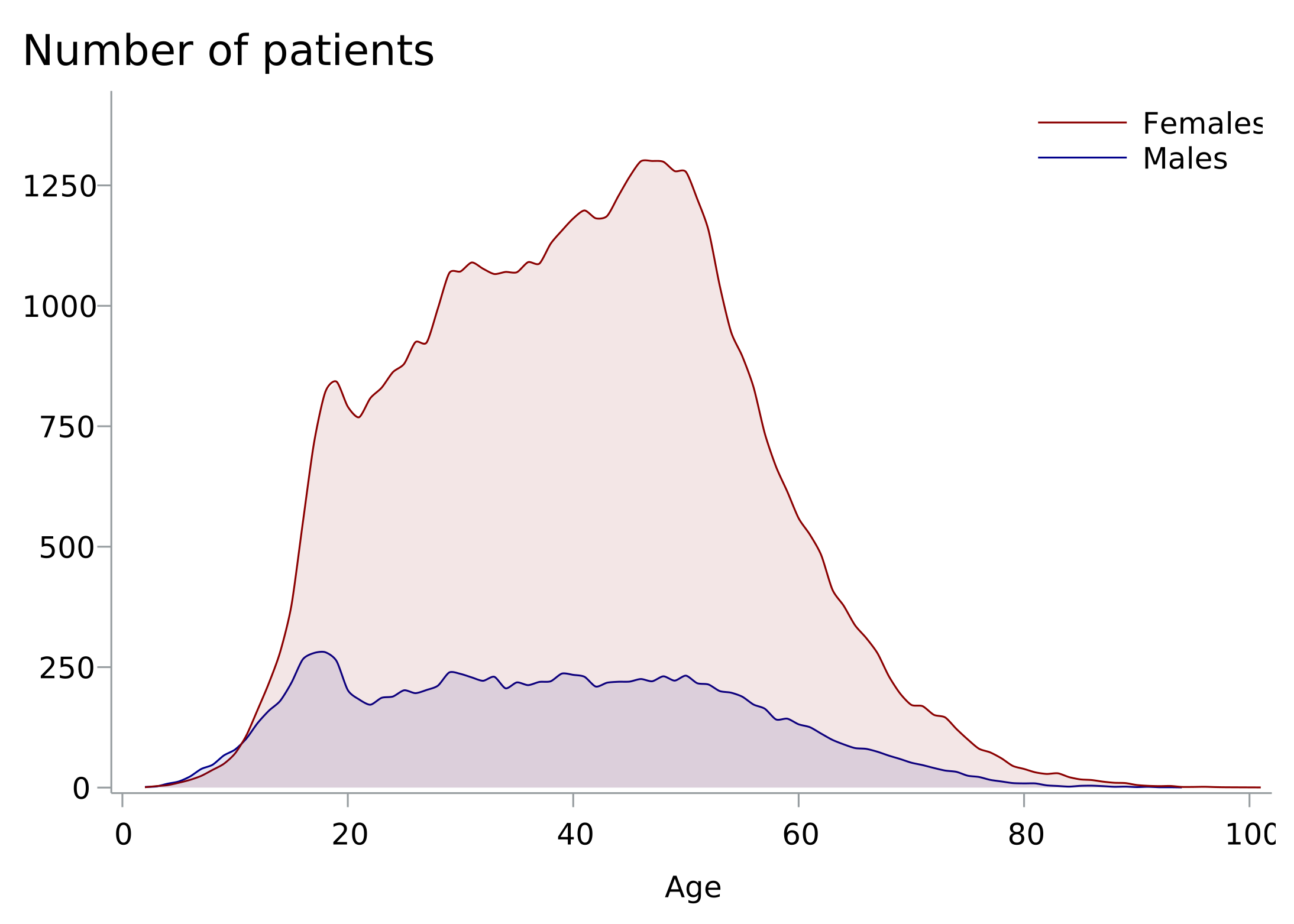
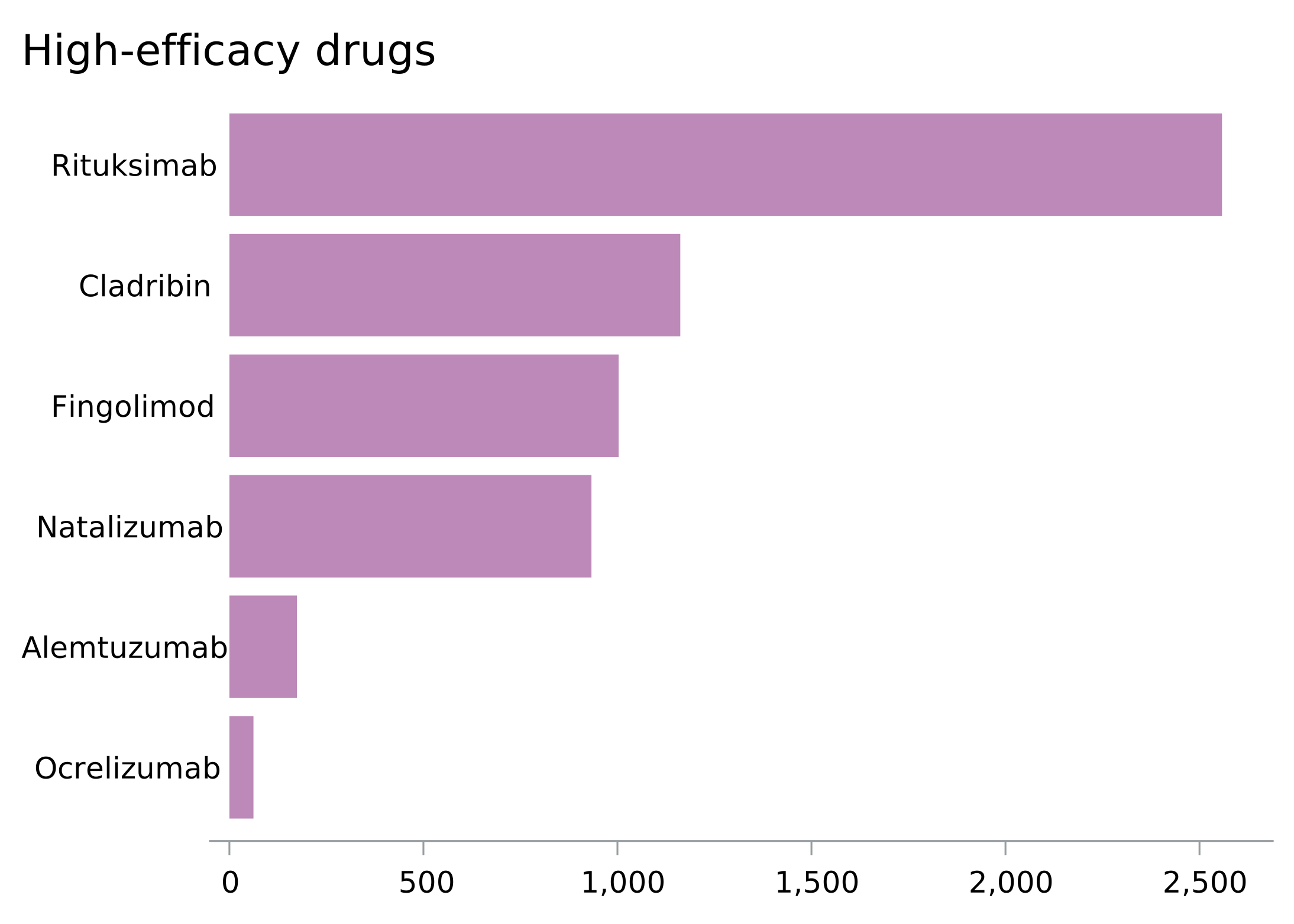
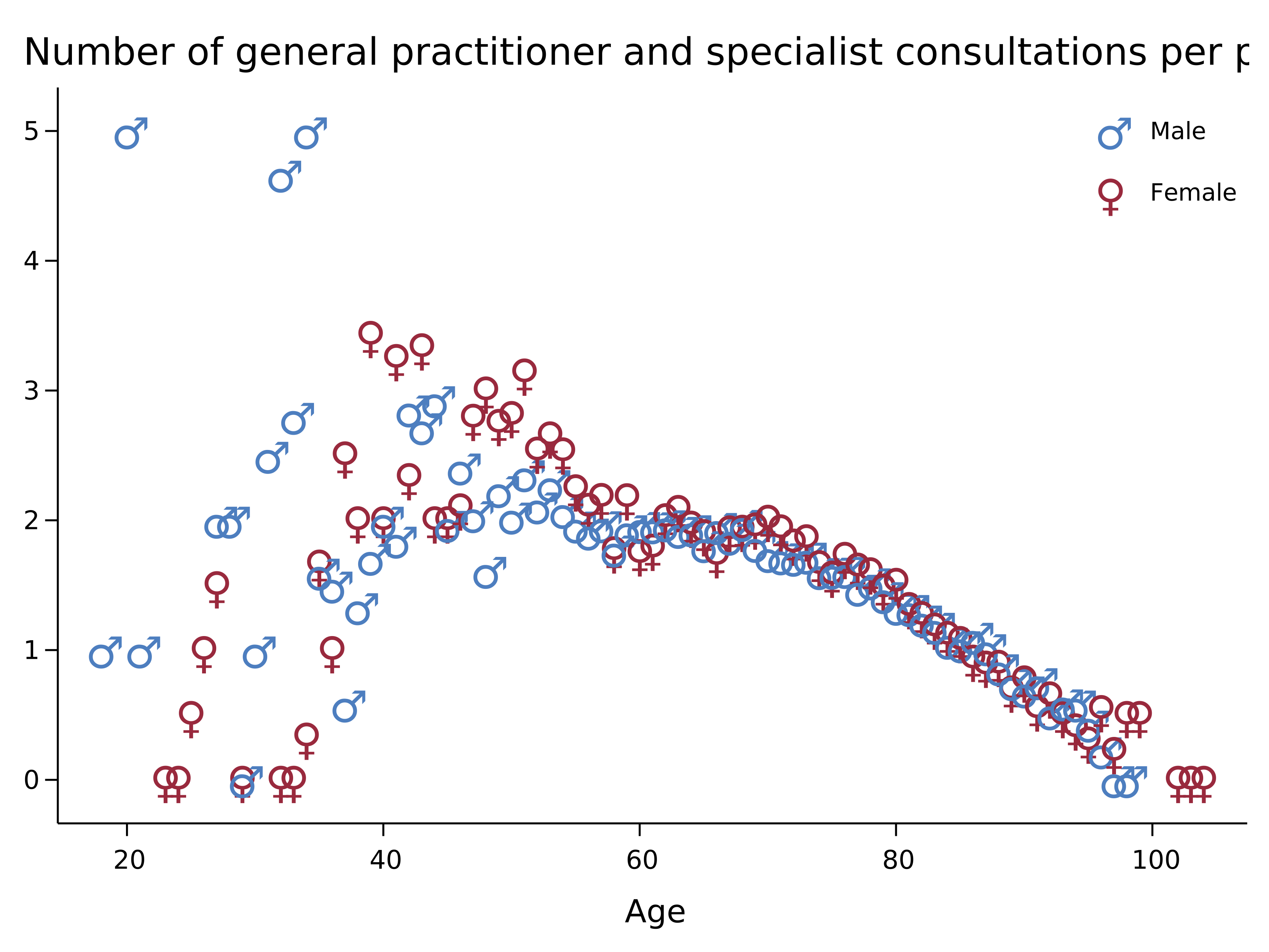
In this atlas, we have examined whether the use of health services for patients with selected chronic conditions varies based on their place of residence - defined by the health institutions' referral areas. The conditions presented in the atlas have been selected on the basis of five criteria, among those are: data quality, the size of the patient group, and whether the patients require follow-up in the specialist healthcare system over time.
About the atlas
The atlas is divided into three parts which are published separately at intervals of a few months. The first part was published on 29 April 2022 and contains the four neurological conditions: epilepsy, migraine, multiple sclerosis (MS) and Parkinson's disease.
The other two parts will present analysis on autoimmune diseases (arthritis, inflammatory bowel disease and psoriasis) and update three diseases chosen from previous health atlases published by SKDE (endometriosis, heart failure and COPD).
Many chronic diseases are lifelong, while others are fully curable in the long term. Chronic diseases can vary in severity, and people with the same disease can have different symptoms and functional levels. A chronic disease can cause constant complaints/symptoms, or have a more paroxysmal character. Some chronic diseases are progressive where the condition worsens over time while others may have a constant effect or improve over time. For many patients with chronic conditions, the need for healthcare services change over time, and many need a combination of services from both the general practitioner and specialist healthcare services.
In internationally published literature, there are many different definitions of chronic conditions (see for example Vip i vården, Calderon-Larrañaga et al 2017, Tonelli et al 2015).
Depending on which definition is chosen, it would result in a varying proportion of the patients treated in the specialist health service. A broad definition could include as much as 50–60% of all patients treated annually in the Norwegian specialist healthcare system. In the health atlas, we have limited ourselves to examining a selection of chronic somatic conditions. The conditions have been selected using five criteria, of which three are linked to the condition and two to data quality/volume:
- The condition is non-reversible - can be treated but not cured.
- The patient experiences a significant loss of health status or quality of life.
- The patient needs follow-up in the specialist health service over a long period of time.
- Data has sufficient validity (reliable coding).
- The patient group is large enough that it is possible to separate random and systematic variation.
Based on these criteria, we have chosen ten conditions for this atlas: Parkinson's disease, multiple sclerosis, epilepsy, migraine, psoriasis, arthritis, inflammatory bowel disease, heart failure, COPD and endometriosis.
The data for the atlas comprises of activities in the specialist health services from the Norwegian patient registry (NPR) and activities at GPs and emergency services from the Norwegian Registry for Primary Health Care (NRPHC) for the period 2018–2021. Supervision of doctors employed at municipal institutions such as nursing homes is not included in the analyses.
As a basis for patient inclusion in the atlas, data from 2018–2021 has been used, but only information from 2019–2021 is shown.
When identifying chronic patients treated in hospital or at a GP/emergency room, all types of contacts are included. When it comes to activity with specialists in private practice under public funding contracts, only contacts that correspond to outpatient contacts in hospitals are included.
For outpatient contacts, it is adjusted for transfers between institutions.
Stated figures for the number of contacts per patient in the general practitioner and specialist healthcare service is the average figure per year and is calculated on the basis of the overall patient population.
Population data are from Statistics Norway.
Disclaimer: The publication has used data from the Norwegian patient registry (NPR) and the Norwegian Registry for Primary Health Care (NRPHC). The authors/SKDE are solely responsible for the interpretation and presentation of the provided data. NPR/NRPHC is not responsible for analyses or interpretations based on the provided data.
The regional health trusts have a responsibility to ensure good, equal and timely specialist health services for anyone who needs it, regardless of their place of residence, cf. the Health Trust Act section 1. In practice, it is the individual health trusts and private providers under a contract with a regional health authority that provide and perform the public health services. Each health trust has a hospital referral area that includes specific municipalities or city districts. Different disciplines can have different hospital referral areas, and for some services, functions are divided between different health trusts and/or private providers. In the health atlases from SKDE, it is the hospital referral areas for specialist health services for medical emergency care that are used.
The size of the healthcare institutions' referral areas varies considerably, as shown in the figure.
There are also differences in the composition of the population in these referral areas, particularly when it comes to the age of the population. The median age varies from 44 years for residents in the referral areas Innlandet and Helgeland to 32 years for residents in the referral area Lovisenberg. All rates and proportions calculated in the atlas are therefore sex- and age-adjusted so that they are comparable (standardised against Norway's population in 2020).
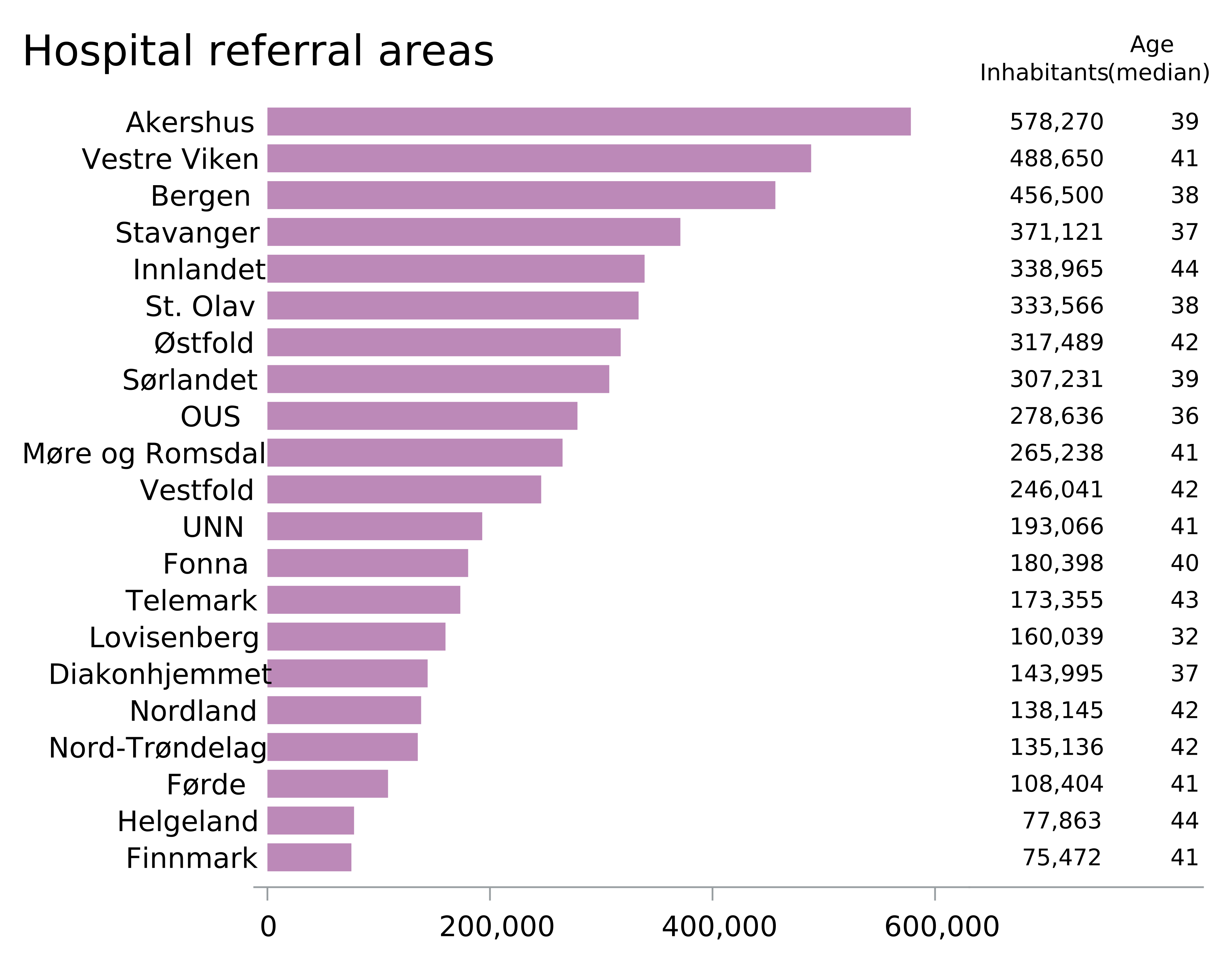
Number of inhabitants in the referral areas and median age in 2020.
The list below shows the health trusts or hospitals for which hospital referral areas have been defined and the short versions of the names used in this healthcare atlas.
Health trust/hospital | Short name |
|---|---|
Finnmark Hospital Trust | Finnmark |
University Hospital of Northern Norway Trust | UNN |
Nordland Hospital Trust | Nordland |
Helgeland Hospital Trust | Helgeland |
Helse Nord-Trøndelag Health Trust | Nord-Trøndelag |
St. Olavs Hospital Trust | St. Olavs |
Helse Møre og Romsdal Health Trust | Møre og Romsdal |
Helse Førde Health Trust | Førde |
Helse Bergen Health Trust | Bergen |
Helse Fonna Health Trust | Fonna |
Helse Stavanger Health Trust | Stavanger |
Østfold Hospital Trust | Østfold |
Akershus University Hospital Trust | Akershus |
Oslo University Hospital Trust | OUS |
Lovisenberg Diaconal Hospital | Lovisenberg |
Diakonhjemmet Hospital | Diakonhjemmet |
Innlandet Hospital Trust | Innlandet |
Vestre Viken Health Trust | Vestre Viken |
Vestfold Hospital Trust | Vestfold |
Telemark Hospital Trust | Telemark |
Sørlandet Hospital Trust | Sørlandet |
Neurological conditions
Main findings
- The proportion of patients with multiple sclerosis who were being treated with high-efficacy drugs varied widely between the referral areas. The variation is considered unwarranted.
- There was high geographical variation in the use of botulinum toxin for patients with migraine. Health North and Health West both had the lowest proportion of patients treated with botulinum toxin, and the lowest proportion of patients treated with CGRP inhibitors.
- Nationally, 20% of the migraine patients are on sick leave every year. The migraine patients have an average of three sick leaves per year due to migraine.
- Around 11,600 patients were treated annually for Parkinson's disease in the general practitioner or specialist healthcare service.
- There was high geographical variation in the use of specialist consultations for patients with Parkinson's disease.
- Use of specialist consultations for the elderly (aged 65 and over) with epilepsy varied widely between referral areas. The variation is considered unwarranted.
As an interpretation framework for the analyses, we have assumed that morbidity is similar across Norway and that the observed geographical variation is not primarily due to variation in morbidity. A thorough description of how we assess variation in the use of healthcare services can be found in the Elderly HealthCare Atlas for Norway.
The analyses show healthcare usage for a limited selection of patients, who in 2018–2021 had at least three contacts with the general practitioner or specialist healthcare service. The reason for such selected patient groups is primarily due to data quality, but there has also been a desire to describe services for patients who have needed healthcare services over time. The vast majority of the patients included in the analyses have received treatment in the health service over a period of at least one year.
The analyses present average figures for the three-year period 2019–2021. For the neurological conditions, we have not focused on investigating the effect of the COVID-19 pandemic. How the pandemic has affected the use of specialist healthcare services, including services for the chronically ill, was described in a separate report Ett år inn i koronapandemien (only available in Norwegian).
The four neurological diseases described in the atlas are very different and can affect completely different groups in the population. It is therefore expected that the proportion of patients who are in contact with the specialist health service annually is different for these four conditions.
Patients with Parkinson's disease are assumed to have regular contact with the specialist health service. Nevertheless, we see great geographical variation in the use of specialist consultations for patients with Parkinson's. This provides grounds for raising questions about whether the service offered to, and the follow-up of, patients with Parkinson's disease is equally distributed in the population.
Most patients with epilepsy are also expected to have regular contact with the specialist health service. However, the proportion of epilepsy patients that received follow-up only from a general practitioner varied significantly between the referral areas. Variations in the proportion of patients followed up in the specialist health service may be due to capacity challenges - in the specialist health service or with GPs - or it may be the result of a planned and desired division of responsibilities. Questions can be raised as to what proportion of the follow-up of epilepsy patients should take place in the specialist health service.
Use of specialist healthcare services is affected by supply, particularly when it comes to the use of expensive disease-limiting treatment. The proportion of patients with multiple sclerosis who received high-efficacy therapy varied widely between the referral areas and the variation is considered unwarranted. There was also large variation in the use of the drug Rituximab, which is used outside the approved indication.
With regard to migraine, our findings indicate that only a small proportion of patients with migraine are followed up regularly in the health service. The severity of migraine varies, and this is probably part of the explanation for why a relatively large proportion of migraine patients with repeated contact only received treatment in the general practitioner service. Since the occurrence of severe migraine is assumed to be the same, this however does not explain the large geographical variation in the proportion of patients who were only in contact with the general practitioner service.
When it comes to the use of botulinum toxin for patients with migraine, we also find large geographical variation. This is a type of treatment that is often relevant for patients who do not react to other preventive drug treatment. There is no evidence that the need for preventive treatment with botulinum toxin varies geographically in Norway. We therefore believe that the results give reason to question whether all patients with migraine receive an equal offer of preventive treatment in the specialist health service.
It has been documented that migraine contributes significantly to the burden of disease in the Norwegian population, at the same time we find that the use of specialist health services for migraine patients is very limited. The fact that as much as 20% of the patients with repeated migraine contacts had an average of three sick leaves a year with a diagnosis of migraine underlines the importance of ensuring these patients have access to good and equitable health services.
In working with the atlas, we have benefited greatly from discussing patient selection and analyses with a broadly composed reference group. In preparing the analyses related to the neurological conditions, the discussions with Professor Øivind Fredvik Grytten Torkildsen at Haukeland University Hospital/University of Bergen have been particularly valuable. Thanks also to senior physician Marte-Helene Bjørk at Haukeland University Hospital/University of Bergen and senior physician Stig Wergeland at Haukeland University Hospital for valuable comments. We would also like to thank Wenche Frogn Sellæg, Wenche Koldingsnes, Reidun Førde, Markus Rumpsfeld and Lise Figenschou for good and constructive discussions.
The diagnosis codes that qualify for inclusion in the various groups are:
Condition | ICD-10 | ICPC-2 |
|---|---|---|
Epilepsy | G40, except G40.5 | N88 |
Migraine | G43 | N89 |
Parkinsons | G20 | N87 |
Multipple sclerosis | G35 | N86 |
We have included patients who have at least three contacts in the specialist health service (NPR) or with a GP/on-call doctor (NRPHC) on three different days during the inclusion period (2018–2021) with the relevant diagnosis code. At least one of the contacts must have the relevant diagnosis code indicated as the primary diagnosis.
We have considered it more important that the patients who are included in the analyses are very likely to have the disease in question, than that we catch as many as possible.
For the conditions MS and Parkinson's, only 4–10% of the total patient population (all patients with at least one contact during the inclusion period) are excluded from the selection per year, based on the requirement of minimum three contacts. There are very few patients who only have one or two contacts during the inclusion period. Most patients with Parkinson's or multiple sclerosis have regular contact and follow-up both with their GP and in the specialist health service. This means that most patients who had - or were examined and received - one of these diagnoses during the period would be included in the selection. At the same time, some patients who may have received a preliminary diagnosis that was later ruled out would probably be excluded because this diagnosis is not repeated in subsequent contacts.
For patients with epilepsy, approximately 15% of the total patient population (all patients with at least one contact during the inclusion period) is excluded, based on the requirement for at least three contacts. Most patients with epilepsy would also have regular contact with both their GP and the specialist health service. There may still be some patients with stable and relatively well-regulated epilepsy who do not need such close follow-up. The requirement for at least three contacts probably means that we are excluding some patients with epilepsy who only needed occasional contact with the health service during the period. At the same time, we can be reasonably confident that we have not included many patients who may have received a preliminary diagnosis of epilepsy, which was later ruled out.
For patients with migraine, 33% of the total patient population (all patients with at least one contact during the inclusion period) is excluded from the selection, based on the requirement for at least three contacts.
A challenge with the inclusion requirement of at least three contacts in the period is that some patients who were diagnosed or started treatment during the last year of the period would not have time to get three contacts before the year is over, and the number of patients is therefore slightly lower in the last year. However, this effect is assumed to be independent of the patient's place of residence and would therefore not affect the degree of geographical variation.
For MS and Parkinson's, there is a very small proportion of the total patient population (all patients with at least one contact during the inclusion period) who only had contacts with one of the relevant diagnosis codes as a secondary diagnosis. The requirement for at least one contact with one of the relevant diagnosis codes as the primary diagnosis thus only excludes a very small number of patients. For epilepsy and migraine, the proportion excluded due to this requirement is somewhat larger, but still low. Of the patients with contacts exclusively in the general practitioner service (NRPHC), there are few who only have contacts with the relevant diagnosis code as secondary diagnosis, compared to those with contacts exclusively in the specialist health service. This is because the use of secondary diagnosis codes is less widespread in NRPHC than in NPR.
The patient selection for some analyses may deviate somewhat from the overall selection in the atlas, and is described in detail in the applicable sections.
Epilepsy
Main findings
- The number of patients with epilepsy per 1,000 inhabitants varied very little between the referral areas.
- There was large and unwarranted variation in the use of specialist consultations for the elderly (ages 65 and over) with epilepsy. There was also considerable geographical variation in the use of specialist consultations for children.
- The proportion of patients who had contacts only in the general practitioner service varied from 19.2% in the referral area Østfold to 8.6% in the referral areas Nordland and Diakonhjemmet.
- The annual number of operations for epilepsy was significantly lower than expected.
Epilepsy is not just one disease, but an umbrella term for a number of chronic conditions with different causes and prognoses that have an increased tendency to epileptic seizures. These epileptic seizures are functional disturbances in the brain caused by abnormal and uncontrolled electrical discharges and can vary greatly from person to person. About 70% of people with epilepsy become seizure-free with treatment. The patient group as a whole has a significantly higher morbidity and mortality. Many people with epilepsy also have other diseases or additional challenges, which means that a comprehensive treatment is very important.
Migraine
Main findings
- Annually, approximately 58,000 patients had repeated contact with the health service due to migraine, corresponding to 12% of the estimated number of patients with migraine in Norway.
- There was large geographical variation in the use of specialist consultations, and the variation increased throughout the period of analysis
- There was high geographical variation in preventive treatment of migraine with botulinum toxin and with CGRP inhibitors
- 20% of the patients in the sample were granted at least one sick-leave by a general practitioner, and these had an average of three sick-leaves per year due to migraines
Migraine is a form of headache that is characterized by episodic headache attacks that are often unilateral and characterized by pulsating pain. The pain is often accompanied by nausea, and hypersensitivity to light and sound. It is estimated that 15% of women and 7% of men have migraines, which corresponds to just under 500,000 people in Norway, and the severity of the condition varies. The disease debuts in childhood or young adulthood, most people have their first attack before the age of 40.
Multiple sclerosis (MS)
Main findings
- Most MS patients had contacts both at the GP and in the specialist health service
- There was a large geographical variation between the referral areas in the proportion of patients with MS who were being treated with high-efficacy drugs in the period 2019–2021
- There was high geographical variation in the use of the less expensive drug Rituximab
Multiple sclerosis (MS) causes inflammation in the central nervous system, and can lead to a serious loss of function for the patient. The disease can make its debut at any age, but most often around 30 years of age. Women are affected somewhat more frequently than men. In Norway, it has been estimated that around 13,000 Norwegians have MS (Norsk MS-register og biobank).
Parkinson's disease
Main findings
- Around 11,600 patients were treated annually for Parkinson's disease in Norway in the general practitioner and specialist health services. This is more than expected.
- Close to 1,000 Parkinson's patients were followed up exclusively in the general practitioner health service.
- There was large geographical variation in the use of specialist consultations for patients with Parkinson's disease
Parkinson's disease is a disease that affects parts of the brain, the basal ganglia, which have the function of fine-tuning movements. The disease is gradually progressive and causes characteristic motor disturbances such as:
- Tremor at rest (rest tremor)
- Increased stiffness and resistance in joints during passive movement (rigidity)
- Slow movements, difficulty starting, sudden stop in movements (akinesia/bradykinesia)
The condition can also cause a number of other problems such as bladder disorder, constipation, sleep problems, exhaustion, depression, cognitive impairment and dementia. It has been estimated that around 7,000–8,000 Norwegians in Norway have Parkinson's disease (Helsedirektoratet 2017, Store medisinske leksikon 2021). The incidence rate increases with age, and onset before the age of 30 is very rare. Most people develop symptoms of the disease after the age of 50, and men are affected more often than women (NEL 2021). The degree of severity of the symptoms varies from person to person, but within a few years most suffer a large burden of disease, reduced quality of life and a significant need for help.
Contact us
If you have any questions or feedback, please contact us!
You can contact us by sending an e-mail to helseatlas@skde.no.